Our approach

Observation, practice, then coaching.

TEACH Rwanda's method is built on a simple observation: teachers change practice when they have seen it work, tried it themselves, and had someone beside them the first time it went wrong.

The philosophy

Play and projects are the method, not the reward.

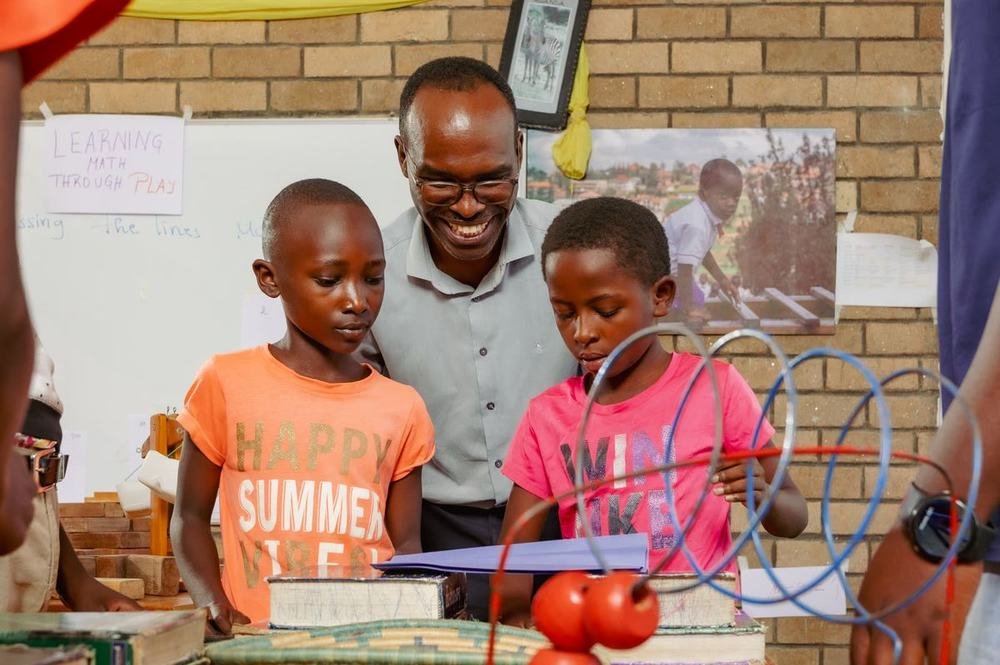
A teacher working through a maths activity with two learners under a Learning Math Through Play display

Why play matters

For a child under eight, play is how abstract ideas become physical enough to hold. A child who has divided a pile of stones into equal groups understands division differently from one who has copied it. Play is not a break from rigour, handled well, it is where rigour begins.

Why projects matter

Projects give learning a reason. A class investigating water in their own community uses measurement, writing, speaking and collaboration because the project demands them, not because a timetable does. Knowledge sticks when it has been used.

The method

Three stages, in order, every time.

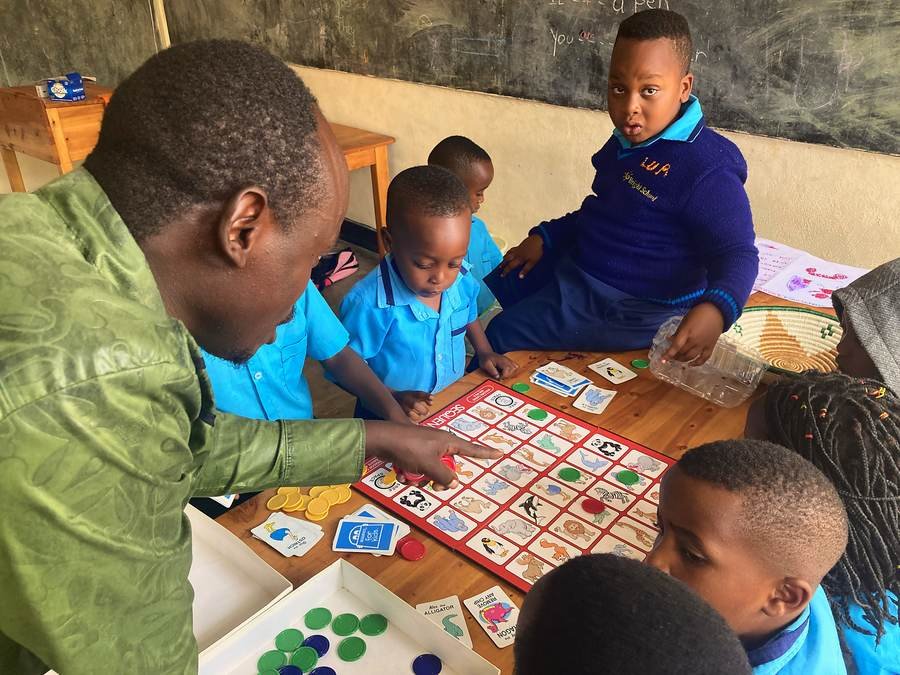
A teacher playing a learning game with a small group of children

1. Observe

Teachers and leaders visit a working classroom where TEACH Rwanda Standards are in daily practice and watch play- and project‑based teaching actually happen, with real children and real noise.
Teachers planning a project mind-map around a shared chart

2. Learn

Small‑group workshops in Kinyarwanda, English and French, held at or near the teacher's own school, built on the national Competence‑Based Curriculum.
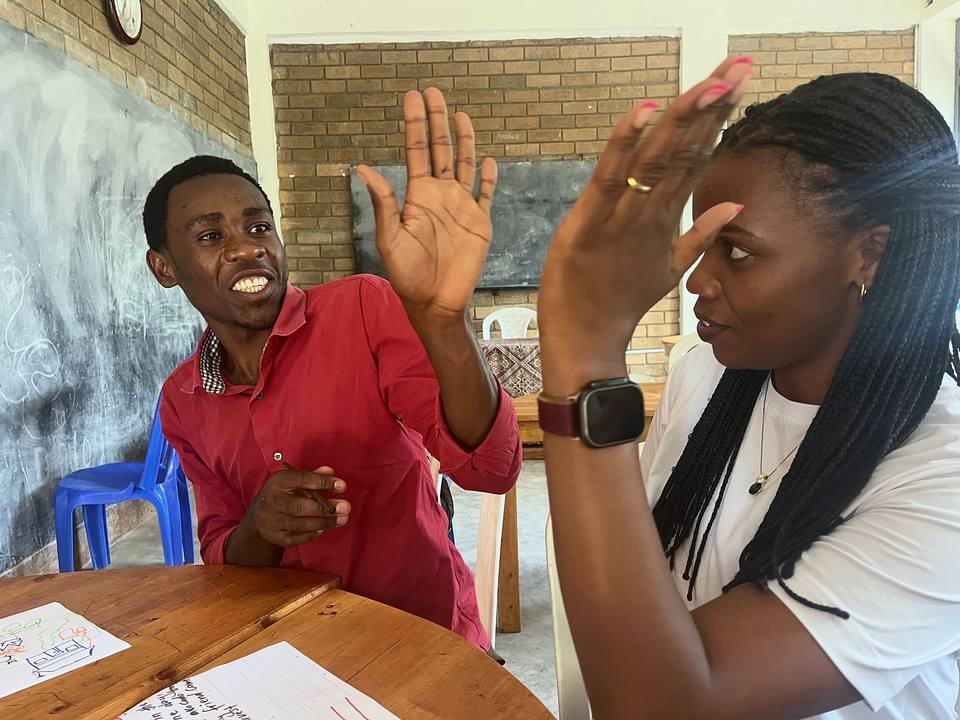
Two teachers talking through a classroom activity

3. Mentor

In‑classroom coaching with the teacher's own learners. Goals and timelines are set together with the teacher and school leadership.

What makes it different

Four things we do that most training does not.

Taught by Rwandan teachers

Workshops are led largely by Rwandan educators who trained in these classrooms themselves. The person in front of the room has taught forty children in Kinyarwanda with limited materials.

Practice between sessions

Teachers return to their own classrooms between workshops to try the method, then reflect together at the next session on what actually happened.

Leadership included

Head teachers and school owners are part of goal‑setting. A teacher cannot sustain new practice in a school whose leadership has not agreed to it.

Materials that exist here

We build with what a Rwandan school can find, make or afford, natural and recycled materials, locally‑made furniture, Rwanda‑centric books.

Theory of change

How the work compounds.

Strategy

Build teacher and school leader capacity through modules, mentorship, CPD and consistent follow‑up.

Strategy

Build partnerships with schools and other stakeholders.

Strategy

Grow exemplary schools that model and advocate for best practice, and evidence‑based research.

Outcome

Learning is joyful, adaptive, engaging, inclusive, child‑centred and evidence‑based.

Outcome

Teachers and students learn in a safe, supportive, empowering environment.

Outcome

Teachers are reflective, creative practitioners learning in collaboration with their peers.

Outcome

Teachers and school leaders are experts in play and project‑based learning, able to share their expertise and become leaders in their field.

Outcome

Students leave school as analytical thinkers and innovators, with entrepreneurial mindsets and the skills to be facilitators and leaders.

The goal

Rwanda will have a population of competent and confident facilitators, leaders and entrepreneurs, with a rich culture of holistic play and project‑based learning.

“This model school does the best in teaching and use of the national curriculum.”
Visiting tutor, Rwandan Teacher Training College

See the approach in a real school

Bright School and Harmony School run this method daily, and welcome visitors.