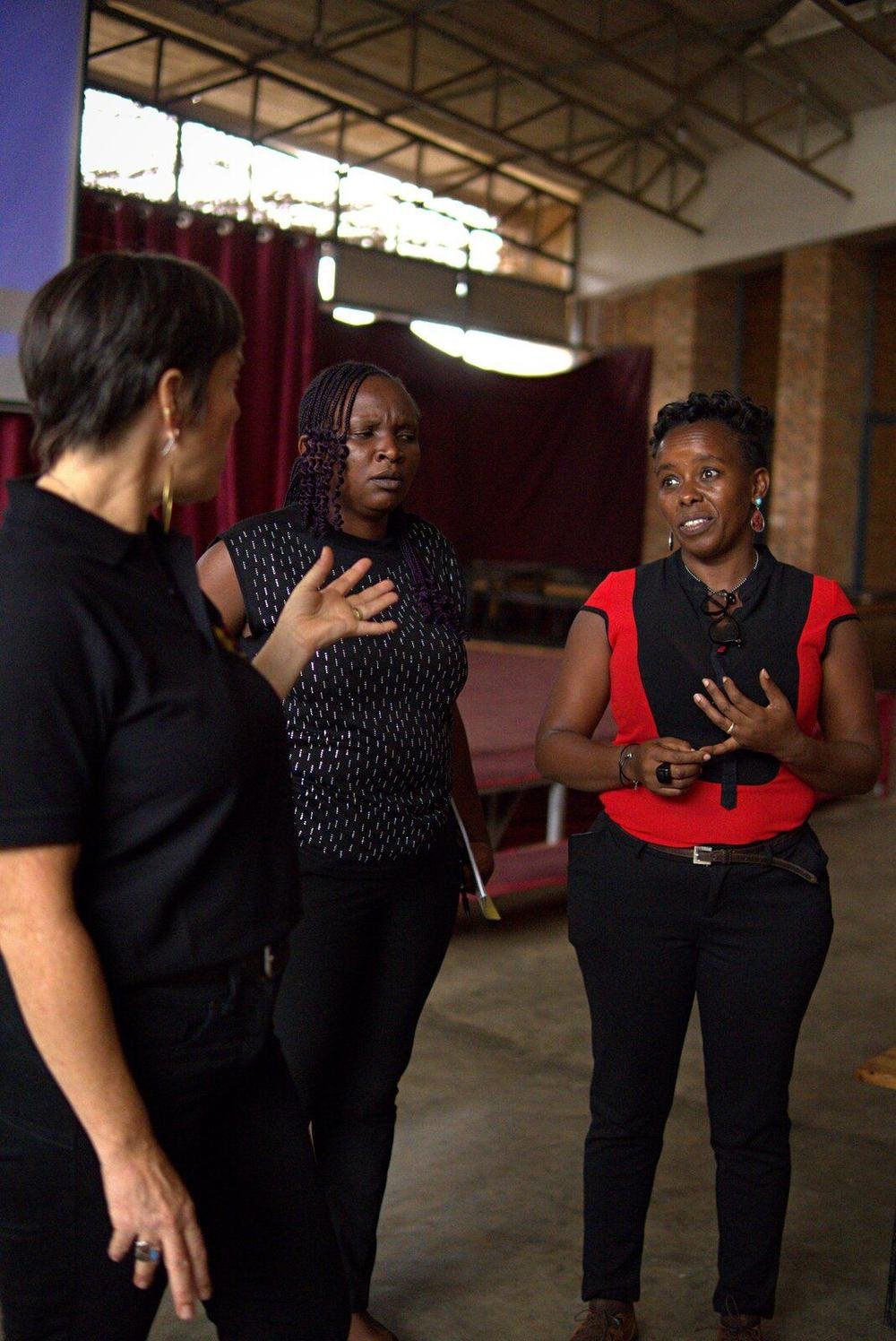
TEACH for Transformation, T4T, is the programme that takes TEACH Rwanda's classroom method to schools it does not run itself. It is deliberately not a single training day, because a single training day changes very little on its own. It is built as a cycle of three modules, each one depending on the one before it.
Module 1: observe first
The cycle begins with observation, not instruction. Teachers and school leaders spend time inside a working classroom where TEACH Rwanda Standards are in daily practice: a normal day, with normal children, not a demonstration staged for visitors. Most teachers coming into the programme have never seen the method run in practice before they are asked to adopt it, so this first module exists to close that gap before any training begins.
Module 2: build a repertoire
Module 2 is intensive workshop training, held in small groups at or near the participants' own schools. Teachers leave with practical tools: KWLS charts, curriculum webs, portfolio strategies, lists of free and found Rwandan materials, built to be used in their own classrooms the following week, not filed away. The aim is a repertoire instead of a script: teachers finish able to plan a project, build a learning centre from found materials, ask open questions and assess without relying solely on recitation.
Module 3: coach it into practice
The third module is in-classroom coaching with the teacher's own learners. A TEACH Rwanda mentor observes, then sets goals and timelines together with the teacher and the school's leadership. This is the module that turns a workshop idea into a habit, and it is also why school leadership has to be part of the process from the start: a teacher cannot sustain new practice in a school whose leadership has not agreed to it.
“A shared language for what good practice looks like, and a way to support it, including timetabling, materials and classroom arrangement that make the method possible.”TEACH for Transformation
T4T is open to schools anywhere in Rwanda. Module 1 observations are arranged directly with TEACH Rwanda's Teacher Mentor; Modules 2 and 3 are scheduled with a school's leadership once a needs assessment has been completed. It is, by design, slower than arriving with a ready-made programme, and it is also, per the organisation's own account of the model, the only version that survives after TEACH Rwanda leaves.