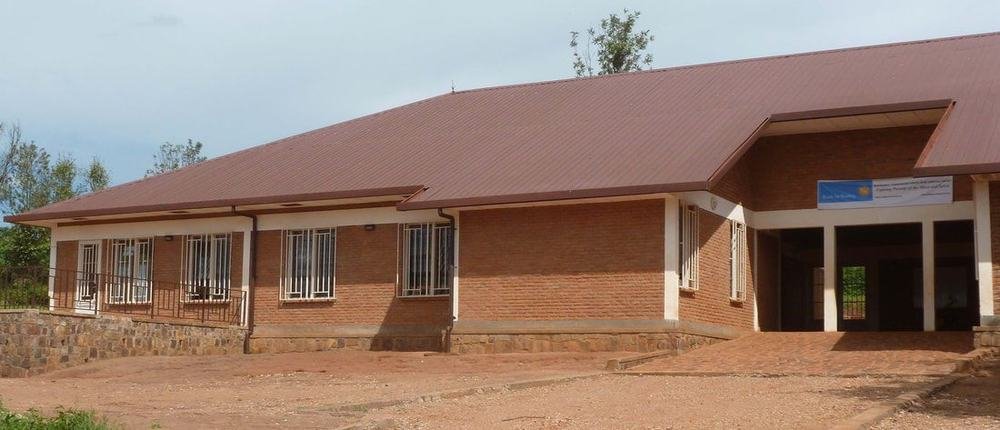
There is an obvious objection to pointing at Bright School's results as evidence that a method works: Bright School is a well-resourced school in a town. Harmony School exists, in part, to answer that objection directly: it runs the same play- and project-based approach in a rural setting, on a shared site with the Rwinkwavu Community Library and Learning Centre.
That last detail is not incidental. Children at Harmony School move between a classroom and a library as a normal part of their day, and the school sits inside something the wider community already uses rather than existing as a standalone institution bolted onto the village. That is a different starting point to Bright School's own campus, and it is a fair test of whether the method depends on Bright School's particular resources to work.
The same materials, argued differently
The pedagogy is unchanged: block work for early spatial reasoning and negotiation, long before those words appear on a curriculum; sand, soil and water treated as the cheapest and most reliable science equipment a Rwandan school has; children reading and telling stories in their own language first, with books that show Rwandan children and Rwandan places. What changes at Harmony School is the setting the method has to survive in, not the method itself.
Staffing reflects the same in-classroom coaching model used everywhere else in TEACH Rwanda's work: two qualified teachers run the nursery classroom across both daily sessions, and a TEACH Rwanda mentor provides ongoing coaching as part of the same modular support that TEACH for Transformation offers partner schools.
“It matters strategically because it answers the obvious objection to Bright School: that the method only works in a well-resourced school in a town.”On Harmony School
Materials and mentoring at Harmony School are funded entirely by donations, the same as the robotics programme. That funding model is deliberate: a rural proof of concept only means something if it can be sustained in a rural setting's actual economics, not propped up by the kind of budget a town campus can draw on.